
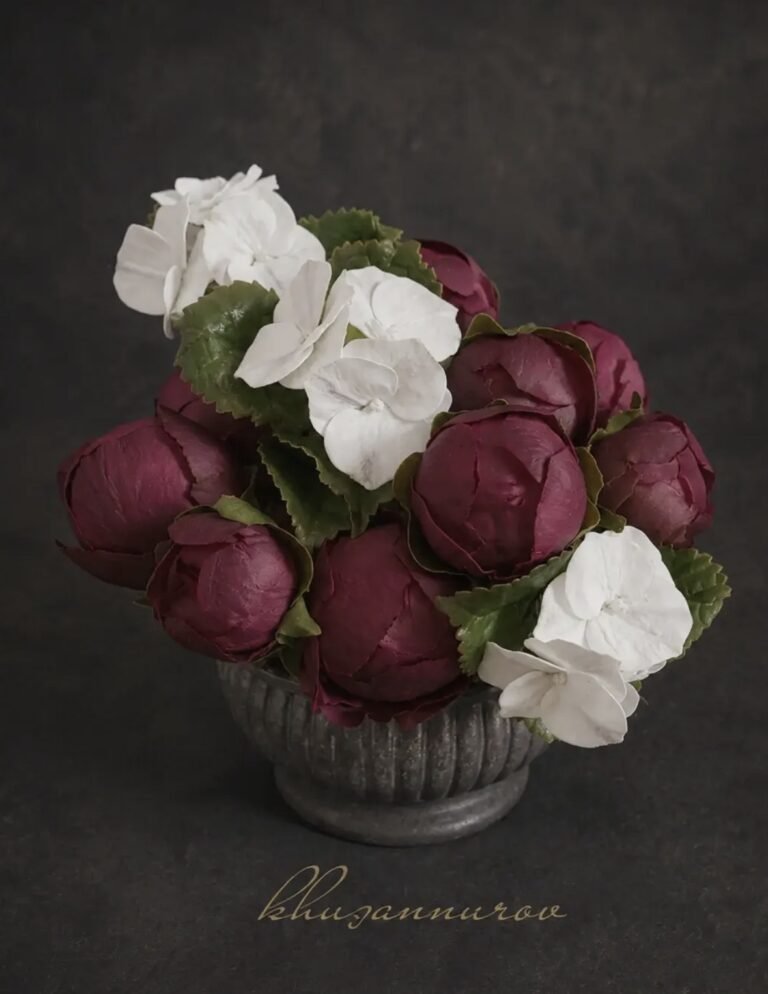
The Art of Sugar Flowers: How a Single Bloom Comes to Life
Every sugar flower begins the same way — with a piece of gum paste and a close look at a real bloom. What follows is a slow, deliberate process that turns something soft and temporary into a lasting piece of art.
Starting With Observation
Before any petal is shaped, there’s observation. A real flower is never uniform — petals curve unevenly, colors shift subtly from base to tip, and light catches each surface differently. Recreating that imperfection convincingly is what separates a realistic sugar flower from a stylized one. This is why studying botanical references, or even a fresh flower on the table, is often the real first step of the process, long before any sugar is touched.
Shaping and Structure
Gum paste behaves very differently from cake fondant — it dries firmer and holds fine detail, which makes it possible to create petals thin enough to look almost translucent. Each petal is rolled, cut, and shaped individually using small tools that mimic the veins and curves found in nature. Wires are often inserted while the paste is still pliable, allowing each petal or leaf to be positioned later exactly as it would grow.
Color, Layer by Layer
Color is rarely applied in a single step. Most realistic sugar flowers are built up through several thin layers of dust or petal-dust color, starting light and deepening gradually toward the base of the petal, where real flowers are often darkest. This layering is what gives the finished piece its depth — a flat, single-tone petal reads as artificial almost immediately, while subtle gradients trick the eye into seeing something alive.
Assembly: Where the Flower Finally Comes Together
Only once every individual petal, leaf, and stem has dried and been colored does assembly begin. This is arguably the most delicate stage — arranging dozens of small, fragile pieces into a single, balanced composition without breaking anything in the process. A finished sugar rose, for example, can involve fifteen or more individual petals, each placed at a precise angle to recreate the way a real rose unfurls.
Why It Takes as Long as It Does
A single detailed sugar flower can take anywhere from a few hours to several days to complete, depending on its complexity. That time investment is rarely visible in the finished piece — which is, in a way, the point. The goal is never to showcase the effort, but to create something that looks like it simply grew that way.
Curious to see more finished pieces? Follow along on Instagram to see this process in action.